Connection - Telegram
The Telegram Connection uses the free, cloud-based instant messaging service Telegram. Telegram client apps exist for Android, iOS, Windows Phone, Windows NT, macOS and Linux. Users can send messages and exchange photos, videos, stickers, audio and files of any type. Telegram also provides optional end-to-end encrypted messaging.
The Telegram Connection is used in the following Task:
Setting up a Telegram application
To use the Telegram Connection you need your own Telegram app. Create one here and then enter the App app_id and App api_hash values from the app in the Connection settings > Main settings tab.
When you authenticate the Connection, a login code is requested and sent to you. Enter that code in the Code field and save the Connection.
Manage Connections > Add > Telegram > Common settings tab
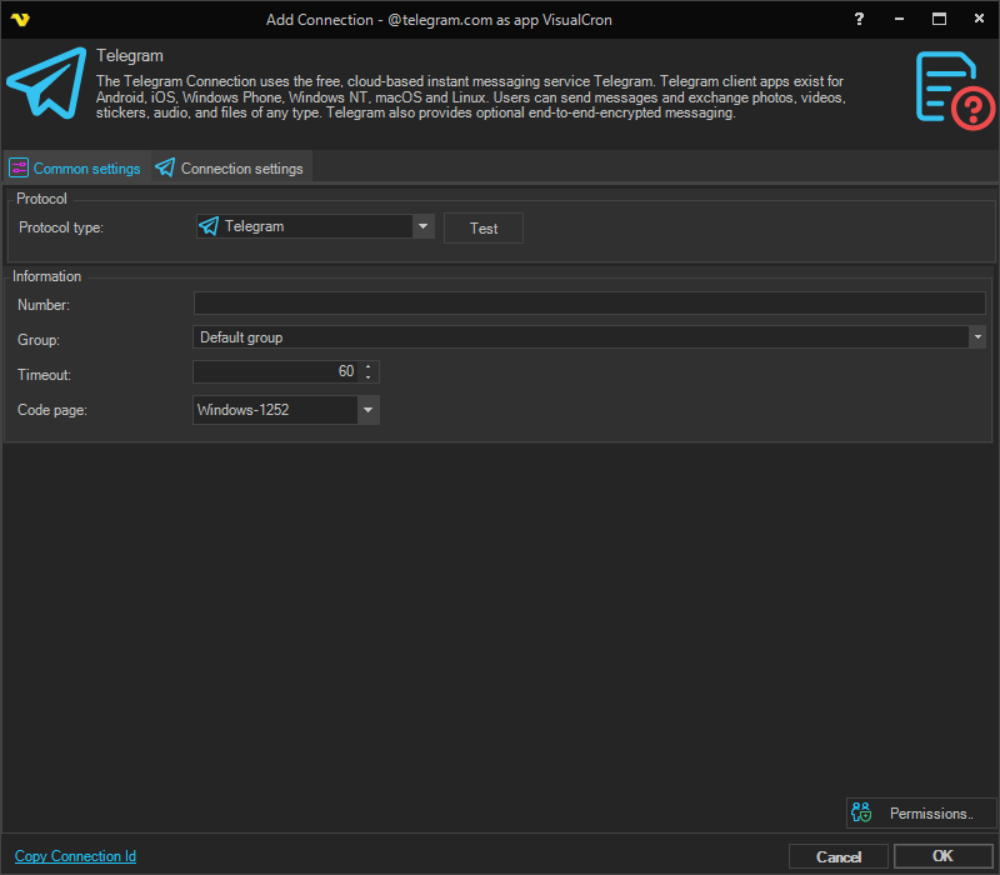
Name
A descriptive name for the connection to distinguish it from other connections.
Group
The group that the connection is a part of.
Timeout
The connection timeout in seconds. Connection will fail after this time period.
Code page
Code page being used.
The Connection settings tab is divided into two sub-tabs: Main settings and Proxy.
Manage Connections > Add > Telegram > Connection settings > Main settings tab
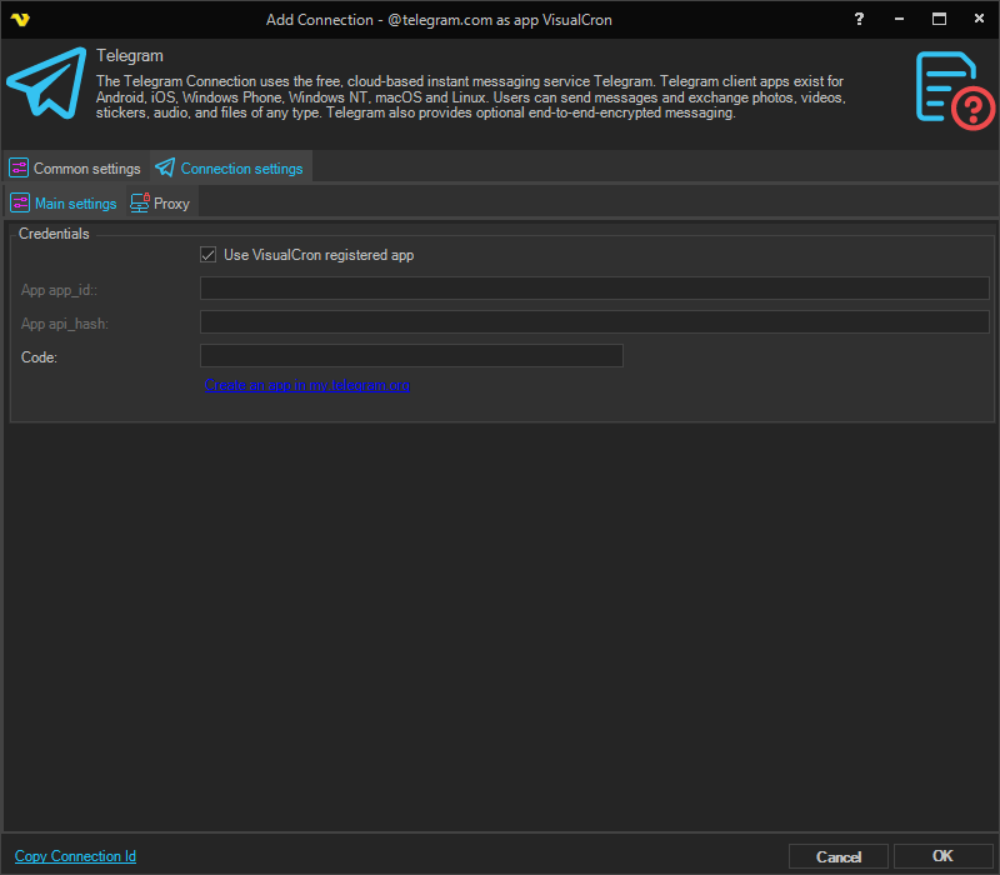
The Credentials group contains the following fields:
App app_id
Copy this value from the settings of your app online.
App api_hash
Copy this value from the settings of your app online.
Code
The login code that is sent to you when you authenticate the Connection. Enter it here and save the Connection.
Create an app in my.telegram.org
A link that opens the Telegram app registration page where you can create your own Telegram app to obtain the App app_id and App api_hash values.
Manage Connections > Add > Telegram > Connection settings > Proxy tab
Proxy type
Select the proxy type to be used.
Address
The host name or IP address of the proxy server.
Port
The port of the proxy server.
Use credentials
The credentials that are associated with the account.
Domain
The domain of the proxy server.
Username
The user name to access the proxy server.
Password
The password to access the proxy server.