Connection - Microsoft Azure
The Microsoft Azure Connection stores connect and logon properties for Microsoft Azure cloud services.
The Microsoft Azure Connection is used in the following Tasks:
Cloud Tasks
- Cloud - Upload file(s)
- Cloud - List item(s)
- Cloud - Download file(s)
- Cloud - Create folder
- Cloud - Delete item(s)
Azure Tasks
- Azure - Start VM
- Azure - Stop VM
- Azure - Restart VM
- Azure - Update VM
- Azure - Create VM
- Azure - Start web site
- Azure - Stop web site
- Azure - Restart web site
- Azure - Remove web site
- Azure - Create web site
Manage Connections > Add > Microsoft Azure > Common settings tab
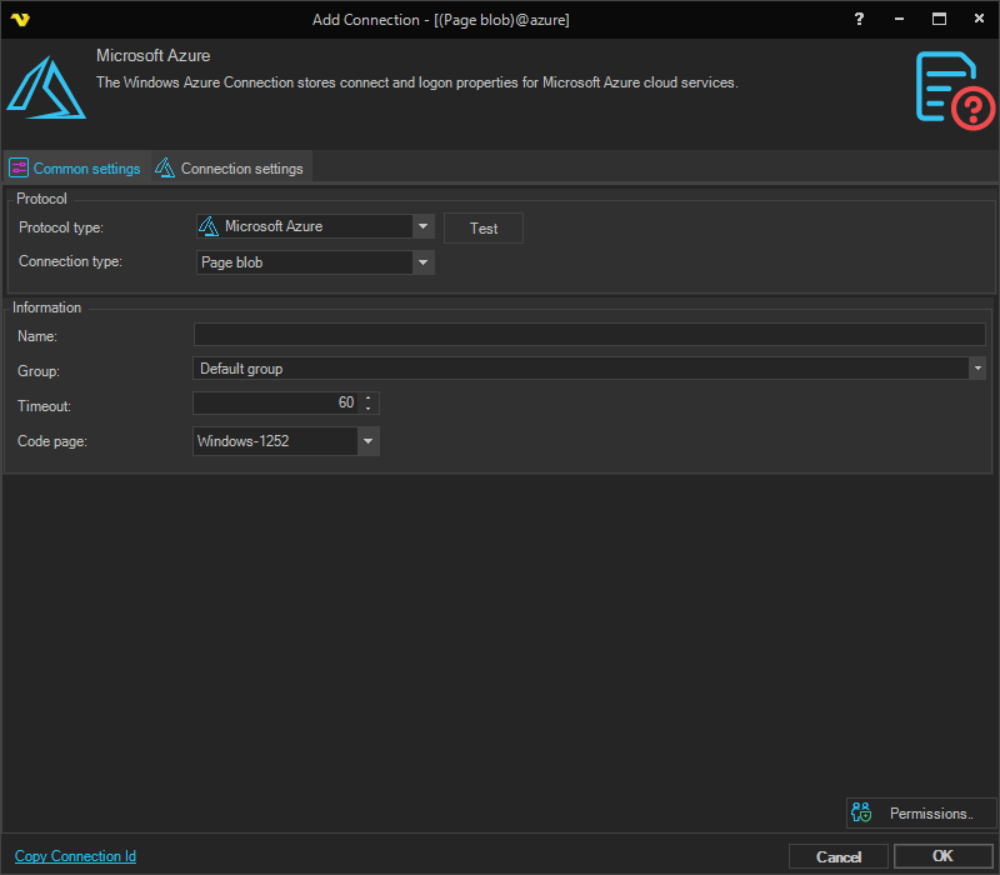
Name
The name of the Connection to uniquely identify it.
Group
The group that the connection is a part of.
Timeout
The connection timeout in seconds. Connection will fail after this time period.
Code page
Code page being used.
Manage Connections > Add > Microsoft Azure > Connection settings tab
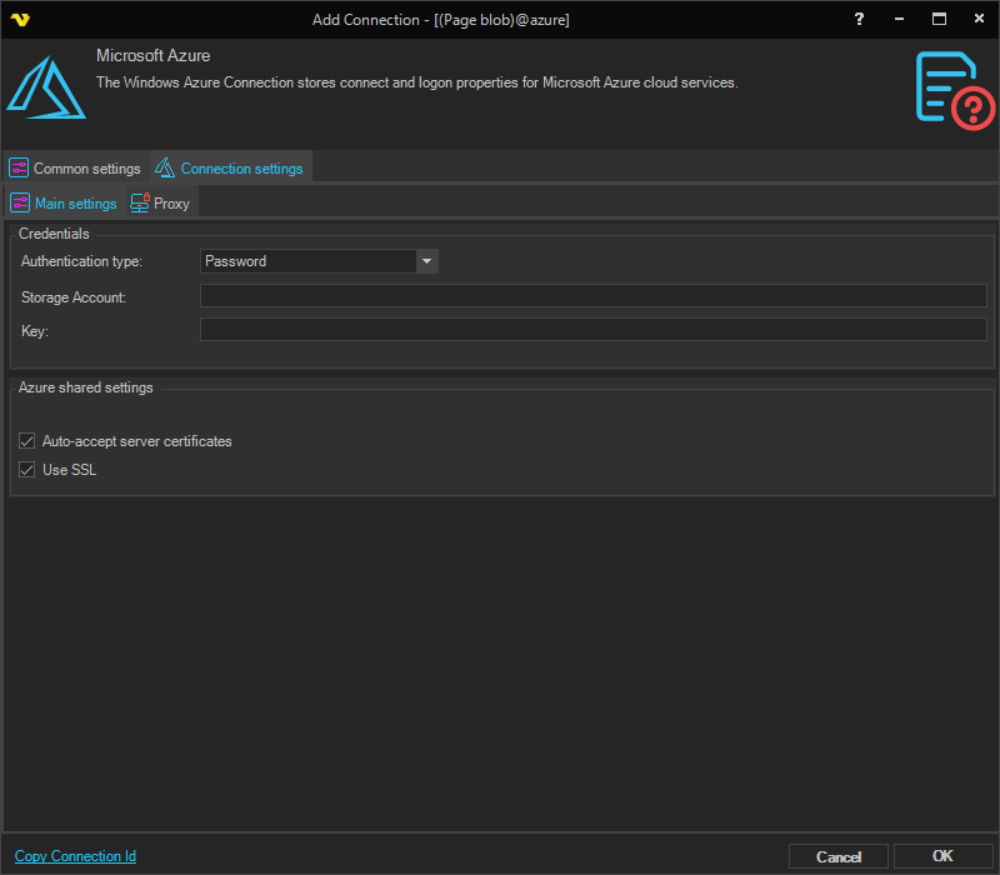
Authentication type
The authentication method used to connect to Azure. Available options:
- Password - authenticates using a Storage Account name and key. Use this for Cloud Tasks (Azure Blob Storage).
- Application - authenticates using an Azure Active Directory application (service principal) with an Application ID, Application key, and Tenant ID. Use this for both Cloud Tasks and Azure Tasks.
- Shared Access Signature - authenticates using a SAS token. Use this for Cloud Tasks when a scoped, time-limited access token is preferred.
The fields displayed in the Credentials section change depending on the selected authentication type.
Storage Account (Password authentication only)
The Azure Storage Account name.
Key (Password authentication only)
The access key for the Storage Account.
Application id (Application authentication only)
The Application (client) ID of the registered Azure Active Directory app.
Application key (Application authentication only)
The client secret (application key) for the registered Azure Active Directory app.
SAS token (Shared Access Signature authentication only)
The Shared Access Signature token for the Azure Storage Account.
Tenant Id (Application authentication only)
The Directory (tenant) ID of the Azure Active Directory tenant where the application is registered.
Account key
The Account key for the account. Please note that when using Azure Tasks (not Cloud) you need to use publish settings file for authentication.
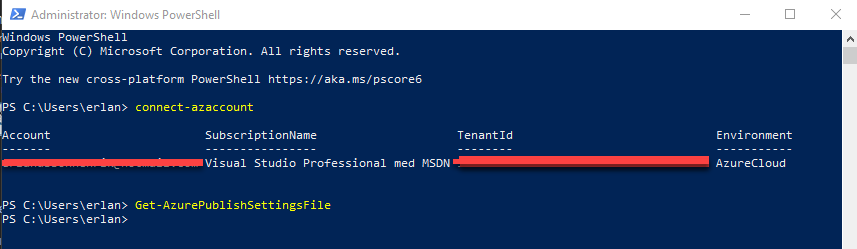
Downloading publish settings file
- Open Powershell
- Type connect-azaccount - logon
- Type Get-AzurePublishSettingsFile
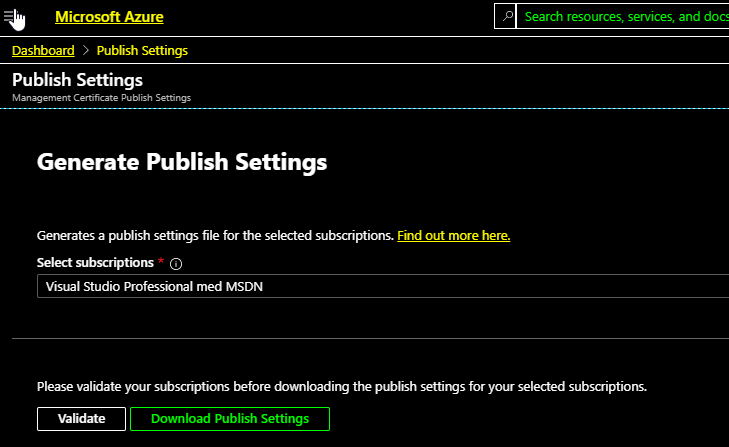
- The browser will open. Select the subscription and click Validate and then click "Download Publish settings"
Setup app (Application authentication only)
Click this link to open the Azure portal to register or manage your Azure Active Directory application: https://portal.azure.com/#blade/Microsoft_AAD_RegisteredApps/ApplicationsListBlade
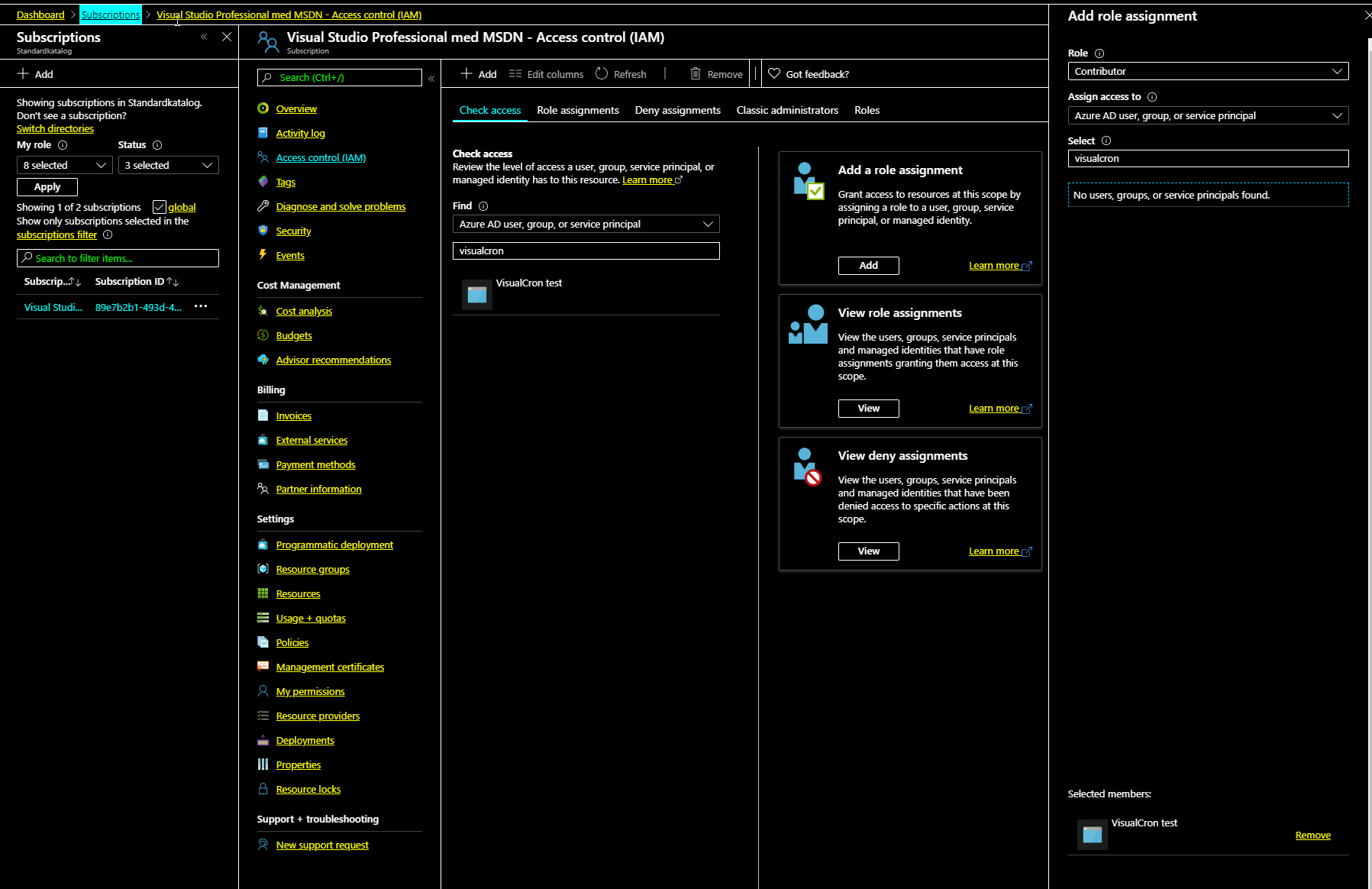
In the Azure portal, navigate to your subscription and assign the Contributor role to the application.
Upload BlockBlob block size (bytes)
The block size in bytes used when uploading to Azure Block Blob storage. Minimum: 4096, maximum: 4,194,304 (4 MB), default: 4096.
Use SSL
When checked, the connection uses SSL encryption for data transfer.
Manage Connections > Add > Microsoft Azure > Proxy tab
Proxy type
Select the proxy type to be used.
Address
The host name or IP address of the proxy server.
Port
The port of the proxy server.
Use credentials
The credentials that are associated with the account.
Domain
The name of the domain to be created.
Username
The user name to access the proxy server.
Password
The password to access the proxy server.
Troubleshooting
HTTP request failed with code 400, message is The value for one of the HTTP headers is not in the correct format.
This probably means that you are using Blobs or "cold" storage - we do not support that at the moment.
ResourceNotFound: No deployments were found. You need to select the right AzureSubscription.
No Such Host Is Known
This means that the storage account name is wrong.